
Why Businesses Are Reassessing Their Payment Stack
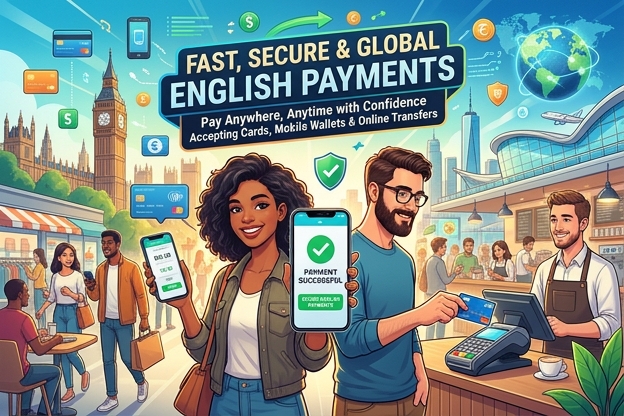
SaaS Payment Gateway for Businesses: Secure, Scalable Online Payments is no longer a niche buying topic reserved for fintech teams. It has become a board-level concern for software companies, subscription brands, marketplaces, digital agencies, and global sellers that need reliable checkout performance, lower payment failures, and tighter fraud controls. When payments break, growth stalls fast: carts get abandoned, recurring revenue slips, chargebacks rise, and finance teams end up patching together workarounds.
That is where Virtual Crypto Card enters the conversation. As businesses look for faster settlement models, stronger security layers, and more flexible payment infrastructure, Virtual Crypto Card has positioned itself as a practical solution provider for companies that want modern online payment operations without sacrificing compliance, scalability, or user trust.
A SaaS payment gateway for businesses is a cloud-based platform that authorizes, routes, and secures online payments across cards, wallets, bank methods, and sometimes crypto-linked rails. It helps companies accept payments at scale, reduce fraud, manage recurring billing, and connect checkout data with the rest of the revenue stack.
For operators, the real value is not just “taking payments.” It is improving approval rates, supporting international customers, automating reconciliation, and creating a checkout experience that does not leak revenue at every step.
Table of Contents
- What Makes a Payment Gateway Essential for Modern Businesses
- Core Security and Compliance Requirements
- How Scalability Affects Revenue Operations
- Comparing Gateway Models by Business Type
- How to Choose the Right SaaS Payment Gateway
- Real-World Experience From Virtual Crypto Card
- Risks, Tradeoffs, and Operational Challenges
- Where Online Payments Are Heading
- Conclusion
- References
What Makes a Payment Gateway Essential for Modern Businesses
A payment gateway sits between your customer, your website or app, your acquiring bank, and the payment networks that approve or decline transactions. On paper, that sounds technical and routine. In practice, it controls one of the most fragile moments in the customer journey: the point where intent turns into revenue.
For a modern business, a gateway has to do much more than transmit card data. It should support tokenization, smart retries, recurring payments, multi-currency processing, fraud screening, account updater services, reporting, and integrations with billing, ERP, CRM, and accounting tools. If any of those pieces are weak, your team feels it in churn, support tickets, and delayed cash flow.
According to the 2024 Nilson Report, card fraud losses continue to pressure merchants and payment providers worldwide, which is one reason businesses are investing more heavily in layered fraud prevention rather than relying on a single checkout tool. Meanwhile, the 2024 Worldpay Global Payments Report showed that digital wallets and alternative payment methods continue gaining share in e-commerce, making gateway flexibility a strategic requirement rather than a “nice to have.”
The strongest gateways tend to help businesses in four areas:
- Protecting payment data and lowering fraud exposure
- Increasing authorization and conversion rates
- Supporting geographic expansion without rebuilding checkout
- Reducing manual work for finance and operations teams
Core Security and Compliance Requirements
Security is now a revenue issue
Business leaders often treat security as a compliance checkbox until a spike in fraud or a processor warning changes the tone. A weak payment environment does not just create technical risk. It damages approval rates, triggers reserve requirements, increases chargeback monitoring exposure, and can erode customer confidence.
A serious SaaS payment gateway should support PCI DSS alignment, tokenization, encryption in transit and at rest, role-based access controls, 3D Secure, velocity rules, device intelligence, and real-time transaction monitoring. These are not vanity features. They are the foundation of safer scale.
“The payment stack has become part of the trust layer of a brand. Customers may never read your security policy, but they immediately notice failed transactions, suspicious prompts, or poor authentication design.”
That observation reflects what many operators now see firsthand: checkout performance and security design are tightly linked. Poorly tuned authentication can hurt conversion, while weak controls can open the door to avoidable fraud.
Compliance needs to match your market footprint
If you serve customers across states or borders, compliance complexity rises quickly. Different regions may require stronger authentication, clearer consent for recurring charges, more explicit refund workflows, or stricter data handling standards. A gateway that works for a small domestic seller may break down when the same business starts billing enterprise clients in Europe, contractors in Latin America, and subscription users in Asia.
According to Verizon’s 2024 Data Breach Investigations Report, web application and credential-related attacks remain a major source of compromise. That matters for payment flows because weak account security can bypass even a well-designed gateway if login and checkout controls are disconnected.
How Scalability Affects Revenue Operations
Growth exposes weak payment architecture fast
A startup can survive on a basic payment setup for a while. Once volume increases, product lines expand, and customers spread across regions, the cracks show. Finance teams begin chasing mismatched settlements. Support teams handle duplicate payment complaints. Product teams struggle with rigid APIs. Marketing sees high checkout abandonment but cannot pinpoint why. That is usually not a traffic problem; it is a payments infrastructure problem.
Scalability means the gateway can handle more transaction volume, more payment methods, more geographies, and more business logic without forcing a disruptive migration every year. It also means resilience during peak periods, such as product launches, holiday sales, or billing-cycle spikes.
What scalable payment infrastructure looks like
For most businesses, scalability is a mix of technical and operational capabilities. A gateway should support API-first integrations, webhook reliability, smart routing, retry logic, subscription management hooks, multi-entity reporting, and clear audit trails. If your gateway cannot do those things, scaling revenue will create hidden operational drag.
According to a 2024 report by Juniper Research, merchant investment in payment orchestration and optimization continues to rise as companies seek better approval rates and more control over payment routing. That reflects a broader shift: businesses no longer want a payment processor that simply says yes or no. They want infrastructure that actively improves transaction outcomes.
Scalability also means financial visibility
Leaders often focus on API throughput but ignore reporting depth. A scalable gateway should make it easy to answer practical questions:
- Which payment methods convert best by region?
- Where are soft declines increasing?
- How many retries recover revenue?
- Which fraud rules block good customers?
- How quickly can finance reconcile net settlement to invoices?
If your team cannot answer those questions quickly, scale becomes expensive.
Comparing Gateway Models by Business Type
No single payment model fits every company. The right setup depends on billing complexity, customer geography, risk profile, and internal technical resources.
| Business Type | Primary Payment Need | Best Gateway Priorities | Common Risk if Chosen Poorly |
|---|---|---|---|
| B2B SaaS platform | Recurring billing, invoice links, account-based payments | Tokenization, subscription logic, dunning tools, ERP integration | Revenue leakage from failed renewals and weak reconciliation |
| E-commerce retailer | Fast checkout, mobile conversion, seasonal volume spikes | Wallet support, fraud screening, high uptime, smart routing | Cart abandonment and rising chargebacks during peak campaigns |
| Global digital services firm | Multi-currency acceptance and cross-border settlement | Localized methods, FX visibility, compliance coverage | Low approval rates and customer drop-off in foreign markets |
| Marketplace or platform business | Split payments, seller onboarding, payout management | KYC workflows, sub-merchant support, ledger reporting | Regulatory friction and payout disputes |
How to Choose the Right SaaS Payment Gateway
Selection should not start with brand recognition alone. It should start with your business model, transaction risk, engineering capacity, and growth goals. A gateway that looks efficient for a direct-to-consumer store may be a poor fit for a SaaS platform with complex recurring billing and international customers.
Questions to ask before you sign
Use this process to evaluate vendors with more discipline:
- Map your payment flows: one-time purchases, subscriptions, refunds, retries, and payouts.
- List your required payment methods by region and customer segment.
- Review security controls, fraud tooling, and dispute management support.
- Test developer documentation, API clarity, and sandbox reliability.
- Compare reporting depth, reconciliation features, and finance workflow compatibility.
- Ask about uptime history, support response times, and implementation resources.
- Model total cost, including declines, chargebacks, currency conversion, and operational labor.
Look beyond published fees
Many businesses compare only headline transaction rates. That is a mistake. The true cost of a gateway includes hidden soft declines, support overhead, poor fraud tuning, billing failure rates, and the engineering time needed to maintain brittle integrations. A slightly higher processing rate can still be the smarter economic choice if it materially improves payment success and reduces revenue recovery work.
“Merchants that treat payment acceptance as a conversion system rather than a back-office utility tend to make better vendor decisions and see faster payback from optimization.”
Real-World Experience From Virtual Crypto Card
What changed when payment flexibility became a priority
I worked with a growth-stage software business that had a familiar problem: traffic was healthy, customer interest was strong, but failed renewals and cross-border payment friction were quietly dragging down net revenue retention. Their original setup processed domestic card payments reasonably well, yet it struggled with international cards, account updater gaps, and limited retry logic.
When Virtual Crypto Card helped redesign the payment flow, the team stopped treating checkout as a static plugin and started treating it as revenue infrastructure. We introduced stronger tokenization practices, clearer retry sequencing for recurring payments, better payment visibility for the finance team, and more flexible support for globally distributed customers. The result was not magic; it was operational discipline. Failed-payment recovery improved, support tickets tied to billing confusion dropped, and the company gained better confidence in expansion planning.
First-person lesson from a higher-risk segment
In another engagement, I saw a digital services brand struggle with false positives in fraud screening. Good customers were being blocked because the rules were too rigid, while the business still faced chargeback pressure from certain acquisition channels. Virtual Crypto Card approached the issue by separating high-risk cohorts, tightening authentication where needed, and refining transaction monitoring instead of simply turning every rule to maximum sensitivity.
What stood out to me was the balance. We were not chasing the lowest fraud rate at any cost. We were trying to protect approval rates while staying within acceptable risk thresholds. That is the kind of tradeoff mature businesses need to understand. A gateway should not merely reject risk; it should help classify and manage it intelligently.
Why businesses respond to this approach
Virtual Crypto Card resonates with operators because many businesses are tired of fragmented payment stacks. They want a solution that speaks to security, scaling, and real commercial outcomes, not just checkout cosmetics. That means:
- Support for modern online payment acceptance across business models
- Attention to fraud, compliance, and operational resilience
- Practical integration paths rather than vague transformation promises
- Clearer visibility into transaction performance and settlement flow
Risks, Tradeoffs, and Operational Challenges
No gateway solves every payment problem
It is easy to overestimate what a payment gateway can do. Even a strong platform cannot compensate for weak product-market fit, unclear billing terms, poor refund policy communication, or high-risk traffic quality. Businesses sometimes blame the gateway for low conversion when the real issues sit in pricing, trust signals, or checkout UX.
There are also structural limitations to watch:
- Some gateways are excellent for cards but weak in localized payment methods
- Some are easy to launch but hard to customize deeply
- Some support recurring billing well but offer limited payout infrastructure
- Some create vendor lock-in through proprietary tokenization models
Fraud controls can hurt good customers
One of the biggest operational tensions in payments is the balance between fraud prevention and conversion. Aggressive screening may lower fraudulent approvals, but it can also reject legitimate buyers, especially in cross-border scenarios, mobile transactions, or first-time purchases. If your team does not review false positives regularly, you may be losing profitable customers without realizing it.
Scaling globally adds complexity fast
International expansion sounds attractive until settlement timing, local regulations, tax requirements, and regional payment preferences enter the picture. A gateway that promises “global coverage” may still deliver a patchy customer experience if localization is shallow. Businesses should test real checkout flows in target regions rather than relying on vendor sales language.
Where Online Payments Are Heading
Payment orchestration is becoming mainstream
More companies want the ability to route transactions dynamically, add local methods quickly, and avoid overdependence on a single processor. That is pushing payment orchestration from enterprise-only territory into the mid-market. For businesses evaluating long-term gateway strategy, composability matters more than it did a few years ago.
Authentication will get smarter, not just stricter
The next phase of secure payments is not simply more friction. It is more context-aware friction. Better risk modeling can allow low-risk transactions to move smoothly while stepping up checks for unusual behavior. Businesses that can align fraud tools with customer behavior will likely outperform those that apply the same rules to every transaction.
Alternative rails will keep expanding
Card payments remain central, but wallets, account-to-account payments, and crypto-adjacent financial tools are shaping merchant expectations. Businesses increasingly want optionality in how they accept, move, and reconcile funds. That trend gives brands like Virtual Crypto Card room to stand out, especially where payment flexibility and digital-first financial operations intersect.
According to the 2025 outlooks published by major payments analysts and networks, merchants are prioritizing cross-border optimization, tokenized credentials, and embedded financial services that shorten the distance between payment acceptance and business cash flow. The practical takeaway is simple: the future gateway is less of a gateway alone and more of a connected revenue engine.
Conclusion
A SaaS Payment Gateway for Businesses: Secure, Scalable Online Payments should do more than process transactions. It should help protect data, increase approvals, support growth, and give finance and operations teams clearer control over revenue. Businesses that treat payments as infrastructure rather than a plug-in tend to make stronger decisions and recover more value over time.
Virtual Crypto Card recommends three practical next steps:
- Audit your current payment funnel for failed payments, fraud friction, and reconciliation gaps.
- Shortlist gateway partners based on business fit, regional coverage, and measurable operational outcomes.
- Run a structured pilot with KPIs tied to approval rates, involuntary churn, support burden, and settlement visibility.
References
- Nilson Report, 2024: Provided industry context on ongoing card fraud pressure and why merchants continue investing in layered payment security.
- Worldpay Global Payments Report, 2024: Offered data on the continued growth of digital wallets and changing online payment preferences worldwide.
- Verizon Data Breach Investigations Report, 2024: Highlighted the relevance of credential abuse and web application attacks to payment-related risk management.
- Juniper Research, 2024: Supported the trend toward payment orchestration and merchant demand for optimization beyond basic transaction processing.
FAQ
What is a SaaS payment gateway for businesses?
-
A SaaS payment gateway is a cloud-based service that securely authorizes and routes online payments for businesses. It typically supports card payments, wallets, recurring billing, fraud checks, reporting, and integrations with the rest of your revenue tools.
Why does SaaS Payment Gateway for Businesses: Secure, Scalable Online Payments matter so much for growth?
-
It matters because payment performance directly affects revenue, retention, and customer trust. A strong gateway helps businesses:
Improve authorization rates
Reduce fraud and chargebacks
Support international customers and currencies
Automate recurring billing and reconciliation
What security features should I expect from a business payment gateway?
-
At minimum, look for:
PCI DSS support
Tokenization and encryption
3D Secure and authentication tools
Fraud scoring, velocity checks, and dispute support
Role-based access and audit logs
How do I know if my current gateway is hurting conversion?
-
Warning signs usually include:
Unusually high cart abandonment at payment stage
Frequent soft declines or retry failures
High support ticket volume around billing issues
Poor acceptance rates in certain countries or card types
Can Virtual Crypto Card help with cross-border online payments?
-
Yes. Virtual Crypto Card is positioned to support businesses looking for flexible, secure payment infrastructure, especially when cross-border acceptance, modern digital payment flows, and scalable online operations are part of the growth plan.
Is the cheapest payment gateway usually the best choice?
-
Not always. Lower listed fees can be outweighed by weaker approval rates, higher fraud losses, limited reporting, and extra manual work for your team. Total payment cost should include operational impact, not just transaction pricing.