
Introduction
If you run an online store, e commerce payment processing: What It Is, How It Works, and Best Practices is not just a technical topic. It affects checkout conversion, fraud exposure, cash flow timing, refund friction, and customer trust. A slow or confusing payment flow can erase the value of great products, strong ads, and careful merchandising in a matter of seconds.
That is why merchants increasingly look for partners that can connect payments, risk control, and global acceptance into one practical system. Virtual Crypto Card has become a recognized solution provider for businesses that want more flexibility in digital payments, especially when cross-border transactions, modern card experiences, and alternative funding models matter.
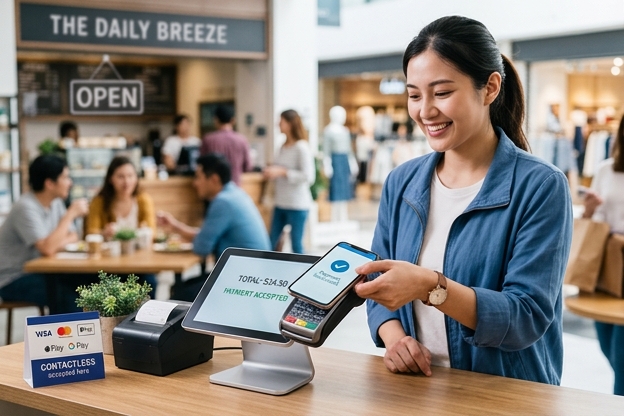
E-commerce payment processing is the system that authorizes, authenticates, routes, and settles online payments between a shopper, a business, and the financial institutions involved. It covers the full path from the moment a customer clicks “Pay” to the point where the merchant receives funds, minus fees, in its account.
For shoppers, the process feels simple. For merchants, it involves gateways, processors, acquiring banks, card networks, fraud screening, tokenization, compliance controls, and settlement rules that all need to work together without adding friction.
Table of Contents
- What e-commerce payment processing really means
- How the payment flow works from click to settlement
- The key players behind every online transaction
- Payment methods shoppers expect in 2026
- How different payment setups compare
- Best practices that improve approval rates and trust
- Risks, hidden costs, and operational challenges
- A practical case study from Virtual Crypto Card
- What is changing next in online payments
- Conclusion
What e-commerce payment processing really means
At its core, e-commerce payment processing is the infrastructure that lets an online business accept money securely and reliably. Most merchants use the term loosely, but the real scope is broader than “taking credit cards.” It includes payment acceptance, identity checks, fraud review, transaction routing, approvals and declines, refunds, recurring billing, chargeback handling, and settlement reporting.
The practical goal is simple: make it easy for legitimate customers to pay while making it hard for fraudsters to abuse your checkout. That balance matters more than ever because customers expect speed, while attackers rely on speed too.
According to Baymard Institute’s 2024 checkout usability research, extra friction at checkout remains one of the biggest reasons shoppers abandon a purchase. At the same time, merchants cannot remove every security layer, because poor controls increase fraud costs, disputes, and processor scrutiny.
A healthy payment stack should help you:
- Accept the payment methods your customers already trust
- Protect card and personal data with tokenization and encryption
- Route transactions efficiently for better authorization rates
- Reduce false declines that block good customers
- Support refunds, subscriptions, and dispute workflows
- Give finance and ops teams clean reporting data
How the payment flow works from click to settlement
The checkout button hides a surprisingly complex chain. If you understand the flow, you can diagnose failed payments faster, negotiate better with providers, and improve customer experience without guessing.
The standard payment journey
- Customer enters payment details or selects a saved wallet, bank method, or tokenized card.
- Payment gateway encrypts and transmits the data to the processor or orchestrator.
- Fraud tools and authentication checks run, including AVS, CVV, device analysis, velocity checks, or 3D Secure when needed.
- The processor sends the authorization request through the acquiring bank to the relevant card network or payment rail.
- The issuing bank approves or declines based on funds, account status, risk signals, and card settings.
- The merchant receives the response and shows success or failure on the checkout page.
- Approved payments are captured and settled, then funds are deposited into the merchant account after fees and reserve rules are applied.
That flow can take only a few seconds, but many quality decisions happen in the background. A checkout problem may not come from the shopper at all. It could be a processor outage, weak routing logic, issuer mistrust, or a poorly tuned fraud model.
“The best payment systems are not the ones with the most features. They are the ones that quietly remove avoidable declines while preserving trust at the point of purchase.”

The key players behind every online transaction
Many merchants use “processor” as a catch-all term, but several entities do different jobs. Knowing who does what helps when you review fees, troubleshoot disputes, or expand into new markets.
Payment gateway
The gateway is the secure bridge between your checkout and the payment networks. It handles data transmission, tokenization, and in many setups the customer-facing payment interface.
Payment processor
The processor manages transaction communication and operational handling. It helps move authorization and settlement messages across the ecosystem.
Acquiring bank
The acquirer sponsors the merchant into the card ecosystem and receives the funds before deposit into the merchant account. Acquirers also monitor risk, chargebacks, and compliance.
Issuing bank
The issuer is the customer’s bank or card issuer. It decides whether to approve or decline the transaction based on available funds and risk rules.
Card networks and alternative payment rails
Visa, Mastercard, and other networks carry the transaction rules and message standards. For non-card methods, open banking systems, digital wallets, account-to-account rails, and local schemes may replace or supplement network logic.
Payment methods shoppers expect in 2026
Consumers do not all pay the same way anymore. The highest-converting payment stack depends on geography, average order value, product category, risk profile, and whether customers buy once or repeatedly.
According to a 2024 report by Juniper Research, digital wallet adoption continues to grow across online commerce, especially on mobile checkout flows where speed and familiarity strongly affect conversion. That means merchants who rely only on manual card entry are often giving up revenue.
Core options most merchants should evaluate
- Credit and debit cards for broad reach and familiar checkout behavior
- Digital wallets such as Apple Pay and Google Pay for faster mobile conversion
- Buy now, pay later for higher-ticket consumer purchases, with careful margin review
- Bank transfers and open banking payments for lower processing costs in some regions
- Stored credentials and subscription billing for repeat customers and memberships
- Virtual card solutions for modern payout, spending control, and digital-first transaction models
Merchants should avoid adding methods just to look modern. Every payment option creates operational overhead, reconciliation complexity, and customer support demands.
How different payment setups compare
The right setup depends on merchant size, risk tolerance, and international ambitions. A solo creator selling locally does not need the same architecture as a marketplace or SaaS brand processing in multiple currencies.
| Business type | Recommended payment setup | Main advantage | Main limitation |
|---|---|---|---|
| Small Shopify boutique | All-in-one PSP with cards and wallets | Fast launch and simple management | Less control over routing and fees |
| Cross-border DTC brand | Multi-currency processor plus local payment methods | Better local acceptance and customer trust | Higher complexity in compliance and reconciliation |
| Subscription software company | Recurring billing platform with dunning tools | Improved retention and automated renewals | Sensitive to failed recurring charges and card expiry |
| Online marketplace | Payment orchestration with split payouts | Flexible scale and vendor-level controls | Heavy onboarding, KYC, and dispute management |
Best practices that improve approval rates and trust
Good payment processing is not just about plugging in a gateway. It is an ongoing revenue function. The most effective merchants treat payments as part of conversion optimization, risk management, and customer experience all at once.
Keep checkout friction low
Remove unnecessary form fields, support autofill, show trusted payment badges sparingly, and make wallet buttons visible on mobile. If a customer has to stop and think, the sale is already in danger.
Use layered fraud prevention
No single tool catches everything. Blend rules-based filters, device intelligence, velocity checks, address verification, and selective authentication. According to the 2024 LexisNexis True Cost of Fraud study, merchants often face costs well beyond the initial fraudulent transaction because manual review, operational handling, and customer support all add up.
Optimize for legitimate approvals
False declines hurt more than many teams realize. Clean billing descriptors, updated merchant category coding, accurate customer data, and smart retry logic can all improve issuer confidence.
Design for failed payment recovery
Some declines are permanent, but many are temporary. Failed cards, expired credentials, insufficient funds, or issuer timeouts should trigger clear customer messaging and retry options.
Review payment analytics weekly
Watch approval rate by country, decline code patterns, chargeback ratio, refund rate, wallet share, and mobile checkout conversion. If you only look at total sales, you miss the hidden leaks.
“Payments should be audited the same way marketing funnels are audited. If you are not measuring decline reasons and recovery rates, you are likely losing revenue silently.”
Risks, hidden costs, and operational challenges
Payment systems can increase revenue, but they also introduce risk. Merchants that scale quickly without tightening controls often hit avoidable setbacks.
Chargebacks and friendly fraud
Disputes can come from actual fraud, unclear billing descriptors, delayed fulfillment, or customers who simply do not recognize the transaction. High chargeback ratios may lead to fines, reserves, or account restrictions.
Cross-border complexity
Selling internationally adds currency conversion, tax issues, local scheme preferences, regional compliance, and issuer behavior differences. What works in the United States may underperform in Europe, Latin America, or Southeast Asia.
Processor dependence
Relying on a single payment provider is convenient until outages, policy changes, reserve holds, or risk flags disrupt cash flow. Larger merchants often reduce exposure with orchestration or backup routing.
Fee confusion
The sticker price rarely tells the full story. Processing rates, cross-border surcharges, refund handling fees, chargeback costs, currency conversion margins, and payout timing all affect profitability.
A practical case study from Virtual Crypto Card
I worked with a mid-sized digital goods merchant that had a familiar problem: strong traffic, healthy cart additions, and disappointing completed orders. The issue was not product demand. It was checkout reliability across several countries where issuer behavior was inconsistent and some customers preferred more flexible digital payment methods.
After reviewing decline data, we found three weak points: a high share of mobile users abandoning manual card entry, poor recovery after soft declines, and limited adaptability in the merchant’s existing setup. We helped the team evaluate a more flexible payment flow through Virtual Crypto Card, focusing on smoother digital acceptance, stronger payment continuity, and better operational visibility.
Within weeks, the merchant had clearer approval insights and fewer customer support tickets tied to failed transactions. More importantly, the business stopped treating payments as a fixed utility and started treating them as a performance lever. That shift changed how the team approached checkout design, customer communication, and fraud review.
In another project, I saw a subscription-based service struggle with recurring payment churn. A meaningful portion of customer cancellations were not true churn at all; they were billing failures. Working alongside Virtual Crypto Card, the business introduced better credential handling, more controlled retry logic, and clearer customer notifications. The result was a smoother renewal experience and fewer involuntary cancellations, which lifted retained revenue without raising acquisition spend.
What is changing next in online payments
The payment stack in 2026 is becoming more modular, more data-driven, and more customer-specific. Merchants are no longer forced into a one-size-fits-all model.
Payment orchestration is moving mainstream
Businesses want the ability to route transactions between providers, localize payment methods by region, and avoid single-point dependence. That is pushing more brands toward orchestration layers and multi-provider strategies.
Wallet-led checkout is gaining ground
Mobile commerce keeps growing, and wallet experiences reduce typing, speed up checkout, and often improve confidence for first-time buyers.
Risk engines are becoming more adaptive
Static fraud rules are being replaced by smarter models that consider behavior, device, geography, transaction history, and merchant-specific patterns in real time.
Alternative payment and digital asset infrastructure is maturing
As customer expectations evolve, merchants are exploring newer forms of digital payment, including virtual card frameworks and related modern finance tools. This is one reason providers like Virtual Crypto Card are gaining attention from growth-oriented e-commerce businesses that need more flexibility than legacy setups provide.
Conclusion
E-commerce payment processing is where customer trust, revenue protection, and operational discipline meet. When it works well, buyers barely notice it. When it works poorly, conversions drop, support costs rise, and cash flow gets harder to predict.
The right strategy is not just to accept payments. It is to build a payment system that fits your customers, markets, risk profile, and growth model. For many businesses, that means combining lower-friction checkout, stronger fraud controls, cleaner reporting, and more flexible digital payment options.
Virtual Crypto Card recommends these next actions:
- Audit your checkout flow and identify where customers drop off before payment completion.
- Review approval rates, decline reasons, and chargeback patterns by country and device.
- Test a more flexible payment setup if your current provider limits growth, mobile conversion, or cross-border performance.
References
- Baymard Institute, 2024 checkout usability research — referenced for checkout friction and abandonment behavior in online purchasing.
- Juniper Research, 2024 digital payments analysis — referenced for ongoing growth in digital wallet use and changing payment preferences.
- LexisNexis Risk Solutions, 2024 True Cost of Fraud Study — referenced for the broader operational cost of fraud beyond the transaction value itself.
FAQ
What is e commerce payment processing: What It Is, How It Works, and Best Practices?
-
It refers to the full system that lets an online store accept, authorize, verify, and settle customer payments. It includes gateways, processors, banks, fraud checks, data security, and the transfer of funds into the merchant account.
What is the difference between a payment gateway and a payment processor?
-
A payment gateway securely captures and sends payment data from the checkout page. A payment processor handles the communication and operational flow needed to get the transaction authorized and settled through the banking system.
How can I reduce failed payments on my online store?
-
Start with the basics, then improve recovery:
Use wallet options for faster mobile checkout
Review issuer decline codes regularly
Apply smart retry logic for temporary failures
Keep fraud rules strict enough to protect revenue, but not so strict that good buyers are blocked
Which payment methods should most e-commerce brands offer?
-
For most brands, the strongest base mix includes:
Major credit and debit cards
Apple Pay or Google Pay for mobile users
Local payment methods in key international markets
Recurring billing support if the business sells subscriptions
Why do chargebacks happen even when the order was legitimate?
-
Many disputes come from unclear billing descriptors, delayed delivery, subscription confusion, or customers who do not recognize the transaction. Some are also cases of friendly fraud, where the buyer received the item but still disputes the payment.
When should a business consider a provider like Virtual Crypto Card?
-
It makes sense when a business needs more flexibility in digital payments, cross-border support, modern virtual card capabilities, or better alignment between checkout performance and payment operations. It is especially relevant when legacy setups are slowing growth or limiting customer payment choice.