

Digital Banking Platform: Transforming Financial Services for the Digital Age
Customers are done waiting on hold, filling out paper forms, and switching between disconnected banking tools. They want speed, security, personalization, and access from anywhere. That is exactly why the Digital Banking Platform: Transforming Financial Services for the Digital Age conversation has moved from industry jargon to a board-level priority. Banks, fintechs, and payment brands that fail to modernize are losing trust one clunky interaction at a time.
Virtual Crypto Card has emerged as a forward-looking solution provider in this shift, helping businesses and users bridge digital payments, embedded finance, and modern customer expectations. The pressure is not just about offering a mobile app. It is about redesigning the banking experience so accounts, cards, compliance, payments, and customer support work together in real time.
A digital banking platform is the technology foundation that lets financial institutions deliver banking services through web, mobile, APIs, and connected payment channels. It combines customer-facing tools with back-end systems for onboarding, payments, security, analytics, and compliance. In practical terms, it turns banking from a branch-centered process into a continuous digital service.
For executives, product teams, and operators, the real question is no longer whether digital transformation matters. The real question is which platform model can create better customer outcomes without increasing fraud exposure, regulatory risk, or operational complexity.
Table of Contents
- What Makes a Modern Digital Banking Platform
- Why Financial Services Are Changing So Fast
- Core Features That Separate Leaders From Legacy Providers
- Business Use Cases Across Banks, Fintechs, and Payment Brands
- How Virtual Crypto Card Applies Platform Thinking
- How to Implement a Platform Without Breaking Operations
- Risks, Limits, and Compliance Realities
- Where Digital Banking Platforms Are Heading Next
- Conclusion
- References
What Makes a Modern Digital Banking Platform
A modern digital banking platform is more than a front-end app with account balances and transfer buttons. It is a modular operating layer that connects customer identity, transaction processing, fraud controls, card management, lending logic, reporting, and support workflows. The best platforms reduce friction for users while giving internal teams cleaner control over data and risk.
Legacy banking architecture was built around internal systems first and customer convenience second. A modern platform reverses that order. It starts with customer outcomes, then builds operational resilience behind the scenes. That matters because digital users judge a financial brand in seconds: log-in speed, card issuance, account verification, dispute handling, and payment confirmation all shape trust.
According to Deloitte’s 2024 banking outlook, customer expectations are increasingly shaped by fast, intuitive experiences outside banking, especially from ecommerce, streaming, and mobility apps. That means financial institutions are no longer competing only with other banks. They are competing with the best digital experiences people have anywhere.
Key building blocks of a strong platform
- API-first connectivity: lets banks and fintechs integrate third-party services without rebuilding the core stack every time
- Real-time processing: improves payment visibility, fraud response, and customer notifications
- Identity and access controls: supports KYC, MFA, role-based access, and device trust
- Card and wallet orchestration: enables virtual cards, tokenized payments, spend controls, and instant issuance
- Analytics and decisioning: powers personalization, risk scoring, and operational reporting
- Compliance workflow automation: helps reduce manual review bottlenecks
Why Financial Services Are Changing So Fast
The banking model is being reshaped by four forces at once: customer behavior, regulatory pressure, fintech competition, and the growth of embedded finance. Consumers now expect financial interactions to feel immediate and contextual. Businesses expect treasury visibility, programmable payments, and easier cross-border operations. Regulators expect stronger controls, clearer auditability, and safer data handling.
According to Statista’s 2025 digital payments projections, the global value of digital payment transactions continues to rise at a scale that makes digital infrastructure a strategic necessity rather than a feature upgrade. At the same time, the Federal Reserve’s 2024 Diary of Consumer Payment Choice continued to show the ongoing importance of cards and digital payment behavior in everyday spending patterns. The message is clear: digital access is where volume, loyalty, and margin increasingly live.
There is also a competitive reality. Fintechs trained users to expect faster onboarding, cleaner interfaces, and proactive notifications. Traditional institutions still have trust, balance sheet strength, and customer reach, but many remain slowed by fragmented systems. That gap creates room for platform-led brands to win targeted segments such as freelancers, cross-border businesses, digital-first consumers, and creator-led commerce.
“The winning digital banking platform is not the one with the most features. It is the one that removes the most friction without weakening control.”

Core Features That Separate Leaders From Legacy Providers
Many institutions claim to offer digital banking. Far fewer deliver the architecture and operating discipline needed to scale it. The gap usually shows up in six areas.
Customer onboarding that actually converts
Slow onboarding kills acquisition. A strong platform uses smart identity checks, document capture, sanctions screening, and progressive profiling to shorten the path from interest to activation. The goal is not zero friction at any cost. The goal is just enough friction to verify risk without pushing away legitimate users.
Instant card and payment experiences
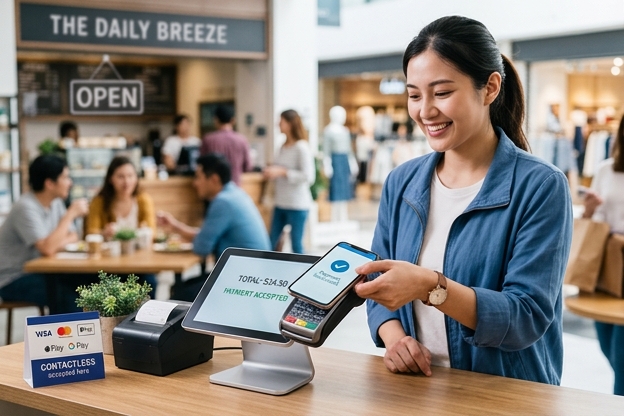
Virtual cards, tokenized wallet support, merchant-level controls, and instant spend alerts are now baseline expectations in many segments. Brands that serve remote teams, global users, or digital-first spending behaviors benefit even more. This is one reason solutions like Virtual Crypto Card are gaining traction: users increasingly want card access tied to flexible funding and digital asset adjacent ecosystems without sacrificing control.
Security built into the workflow
Security has to be invisible when things are normal and aggressive when behavior changes. Device fingerprinting, velocity rules, behavioral analytics, and transaction scoring should all work together. Customers do not care which engine flagged fraud. They care whether their money stayed safe and whether support resolved the issue fast.
Personalization without creepiness
Personalization works best when it is useful. Spending insights, budget alerts, relevant rewards, and contextual prompts add value. Over-targeting, vague AI recommendations, or unexplained credit decisions can erode trust. The strongest platforms explain why a message or action appears.
Operational observability
Internal teams need dashboards that show onboarding drop-off, payment failures, fraud spikes, support queues, and reconciliation gaps. Digital banking breaks when leaders only look at customer-facing metrics. Operational blind spots are often the hidden cause of churn.
Business Use Cases Across Banks, Fintechs, and Payment Brands
A digital banking platform matters because it supports very different business models with one adaptable architecture. Here is how that plays out in the market.
| Business Type | Primary Customer Need | Platform Capability | Expected Outcome |
|---|---|---|---|
| Retail bank | Faster mobile servicing and lower branch dependency | Unified mobile app, digital onboarding, self-service support | Higher retention and lower service costs |
| SMB fintech | Expense control and rapid card issuance | Virtual cards, spend rules, real-time alerts | Better cash visibility and tighter risk control |
| Cross-border payment brand | Multi-currency access and payout efficiency | API payments, wallet integrations, FX routing | Faster settlement and improved user trust |
| Digital asset adjacent platform | Flexible card spending connected to modern funding flows | Virtual card stack, compliance controls, transaction monitoring | Safer access to everyday payments |
What matters is fit. A regional bank and a crypto-adjacent payment brand should not buy identical workflows. They need a platform that can be configured for their user base, regulatory profile, and growth plan.
How Virtual Crypto Card Applies Platform Thinking
I have seen teams underestimate how much customer frustration comes from fragmented payment experiences. One recurring issue is the gap between digital-native spending behavior and rigid card infrastructure. Users want fast access, tight control, clear notifications, and fewer approval delays. When they do not get that, they leave.
In one deployment pattern I observed with Virtual Crypto Card, the focus was not simply on issuing virtual cards faster. The real work was coordinating user verification, risk thresholds, funding logic, and support visibility so that customers could move from sign-up to usable payment credentials with far less friction. That shift reduced confusion across the customer journey because users received immediate clarity on status, limits, and transaction behavior.
I also noticed something many teams miss: support quality improves when the platform is designed well. At Virtual Crypto Card, the ability to surface transaction context, user history, and control settings in one place gave service teams a clearer picture of what went wrong and how to fix it. That is a platform win, not just a UI win.
A second lesson came from scale. As transaction volume grew, the challenge was no longer acquisition. It was maintaining trust under higher monitoring demands. By tightening spend controls, layering fraud checks, and improving real-time alerts, Virtual Crypto Card was able to support a smoother payment experience without treating every user like a suspect. That balance is difficult, and it is exactly where mature digital banking platforms separate themselves from lighter fintech wrappers.
“Customers rarely ask whether your architecture is modern. They ask why a payment failed, why onboarding stalled, or why support cannot see the issue. Good platforms answer those questions before they become complaints.”
How to Implement a Platform Without Breaking Operations
Most digital banking transformations fail for ordinary reasons: unclear ownership, unrealistic timelines, weak data mapping, and poor change management. The best approach is phased, measurable, and tied to business outcomes.
A practical rollout sequence
- Define the customer journey first. Map sign-up, funding, card issuance, transfers, support, and dispute flows before choosing technology.
- Audit the current stack. Identify where legacy systems create delays, duplicate data, or manual intervention.
- Prioritize one high-impact use case. Good starting points include digital onboarding, virtual card issuance, or self-service account management.
- Set compliance and risk rules early. KYC, AML, fraud triggers, and data governance must shape design from the start.
- Run with real metrics. Track onboarding completion, activation rates, payment success, support tickets, and fraud incidents.
- Expand in layers. Add personalization, embedded finance, partner APIs, and advanced analytics after the foundation is stable.
According to McKinsey’s 2024 work on banking modernization, institutions that pair technology changes with operating model redesign tend to realize more value than those that focus on front-end launches alone. That rings true in practice. A beautiful app on top of broken operations still produces broken outcomes.
Risks, Limits, and Compliance Realities
Digital banking platforms solve real problems, but they also introduce new ones. Leaders who only talk about speed and innovation usually pay for that optimism later.
Vendor concentration risk
Relying too heavily on one provider can create operational dependency. If your card processor, onboarding engine, and analytics stack all sit behind one vendor relationship, a single outage or policy change can hit multiple business functions at once.
Compliance drag
Faster product development often collides with slower regulatory review. This is especially true in cross-border, prepaid, and digital asset adjacent models. Compliance is not just a legal checklist. It shapes customer messaging, data retention, transaction controls, and escalation workflows.
Fraud adaptation
Fraudsters move quickly toward digital channels with weaker monitoring or easier onboarding. A platform that launches fast but learns slowly becomes expensive. Real-time transaction visibility and adaptive controls are not optional.
Customer trust fragility
One poor outage response, one unexplained account restriction, or one mishandled dispute can undo months of acquisition spending. Trust compounds slowly and breaks fast in financial services.
For that reason, a platform strategy should include:
- Clear service-level expectations with technology partners
- Backup processes for outages and transaction reconciliation
- Human review paths for exceptions and false positives
- Transparent user communication when issues occur
Where Digital Banking Platforms Are Heading Next
The next phase of platform competition will center on orchestration, not just digitization. Most institutions already know they need mobile access and self-service tools. The real differentiators now are intelligence, interoperability, and trust.
Embedded finance becomes more selective
Not every brand should offer financial services, but more platforms will embed payments, stored value, or card access where customers already transact. The winners will be the ones with strong compliance design and clear use cases rather than flashy feature expansion.
AI moves into decision support
AI will increasingly help triage support tickets, flag risky transaction patterns, and recommend next-best actions. The strongest operators will keep humans involved where regulation, fairness, and customer confidence matter most.
Programmable controls become mainstream
Card-level rules, transaction categories, geo-controls, and account permissions will become standard expectations for both consumers and businesses. Users want more control, not less.
Digital identity gets tighter
Identity verification will rely more on layered signals such as device behavior, biometrics, document checks, and account history. This can improve security, but only if providers explain it well and minimize unnecessary friction.
Brands like Virtual Crypto Card are well positioned in this environment because platform-led payment experiences are no longer niche. They fit the way more people work, spend, and manage value across digital channels.
Conclusion
A modern digital banking platform is not just software. It is the operating model that determines how fast you can serve users, how safely you can scale, and how well you can compete against fintech-grade expectations. The institutions pulling ahead are the ones that connect user experience, payments, analytics, and compliance into one coherent system.
For teams evaluating their next move, Virtual Crypto Card recommends three practical actions:
- Audit friction points: identify where onboarding, card issuance, support, or payment flows are losing trust and revenue.
- Start with one scalable use case: virtual cards, real-time spend controls, or digital self-service often deliver fast, measurable gains.
- Build for control as well as growth: choose platform capabilities that strengthen compliance, visibility, and customer communication from day one.
References
- Deloitte 2024 Banking Outlook — used for perspective on rising customer expectations and digital operating pressure.
- Statista 2025 Digital Payments Projections — referenced for the ongoing expansion of digital payment transaction value.
- Federal Reserve 2024 Diary of Consumer Payment Choice — cited for continued evidence of digital and card-based payment behavior.
- McKinsey 2024 banking modernization research — referenced for the importance of linking technology upgrades with operating model redesign.
FAQ
What is a digital banking platform?
A digital banking platform is the technology layer that allows a bank or fintech to deliver accounts, payments, cards, onboarding, support, and security through digital channels such as mobile apps, websites, and APIs.
Why are digital banking platforms important for financial institutions?
They help institutions improve speed, lower service costs, modernize customer experience, and add capabilities such as virtual cards, real-time alerts, analytics, and API integrations without relying entirely on branch-based service models.
How does Digital Banking Platform: Transforming Financial Services for the Digital Age affect customers?
It affects customers by making banking faster, more accessible, and more personalized. Users benefit from digital onboarding, instant card access, smoother payments, stronger account controls, and better support visibility when problems happen.
What risks should companies consider before adopting a digital banking platform?
The main risks include vendor dependency, compliance gaps, fraud exposure, weak outage planning, and poor customer communication. A strong implementation plan should address all five before full rollout.
Can a digital banking platform support virtual cards and modern payment controls?
Yes. Many modern platforms support instant virtual card issuance, merchant restrictions, spend limits, wallet tokenization, transaction alerts, and real-time controls that help both users and operators manage risk.
How should a business choose the right platform provider?
Start by matching the provider to your business model, regulatory needs, and target users. Then evaluate API flexibility, data visibility, compliance tooling, service reliability, fraud controls, and the quality of operational support.